
IBEW line workers are often the ones called to restore electricity when storm-tossed trees take down power lines.
In this story: But when it comes to preventive tree management , even well-intentioned laws don’t always serve the public.
The big picture: That’s why a federal committee exploring permit reform on public lands asked an IBEW member to testify on Capitol Hill Feb. 24. The invite was issued by the Republican majority, highlighting the bipartisan nature of the issue.
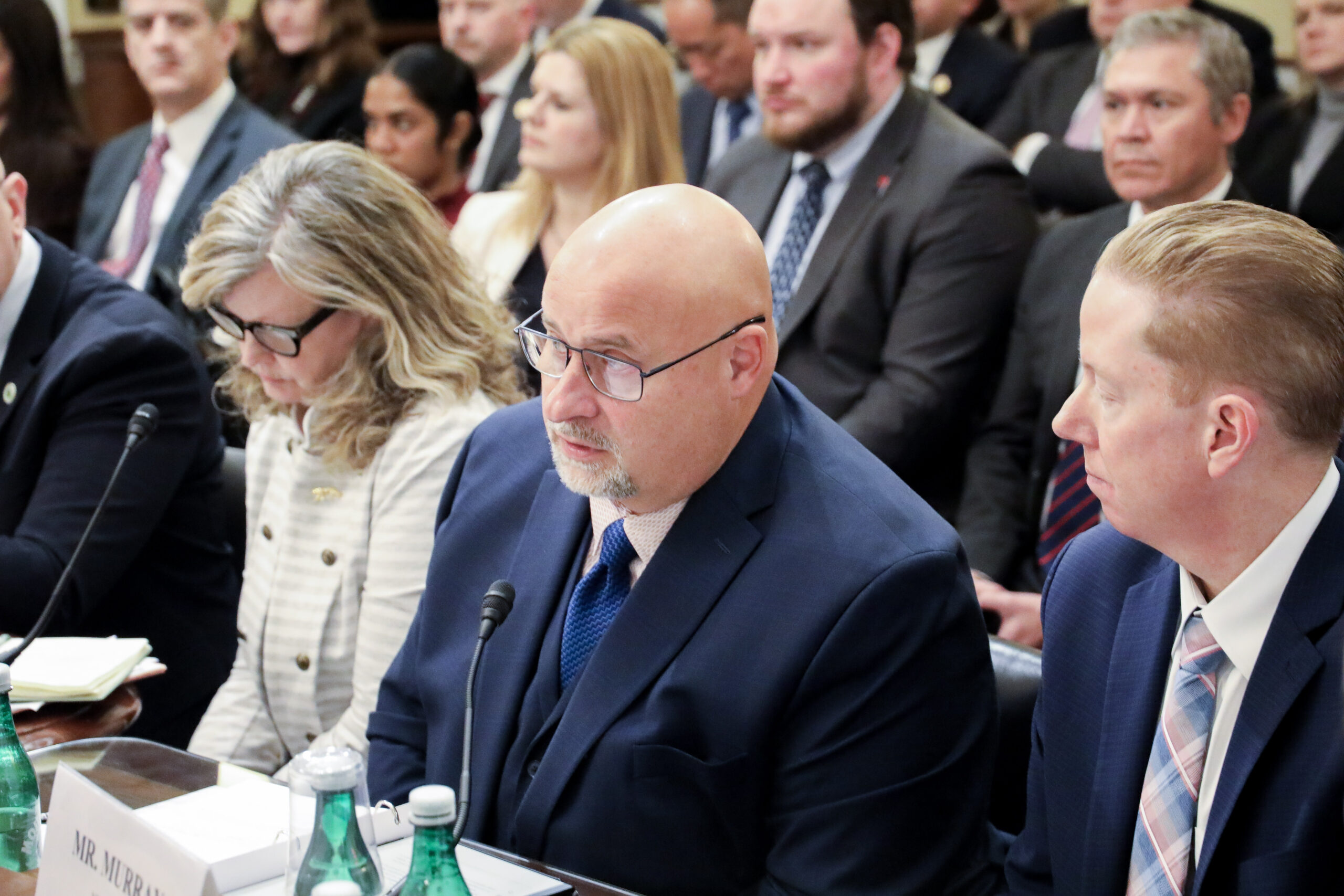
Vacaville, Calif. Local 1245 member and Assistant Business Manager Ralph Armstrong had planned to explain how disjointed federal policies and lengthy permit approval processes hurt ratepayers, public safety and utility infrastructure. However, IBEW International Representative George Arhos delivered Armstrong’s remarks at the House Natural Resources subcommittee hearing after bad weather prevented Armstrong from attending.
“Utilities need a clear, consistent, and timely process to remove hazardous vegetation,” Arhos said. “These delays are not just bureaucratic inconveniences. They increase wildfire risk and drive up electricity costs.”
Zoom in: Local 1245’s jurisdiction includes Northern California and Nevada and includes 5,000 line clearance tree trimmers and vegetation management inspectors in its membership. This gives them a unique perspective on the links between inconsistent laws and vegetation management.
Rising costs: “Procedural delays and lack of consistent requirements across federal lands not only jeopardize safety, they also contribute to rising electricity costs,” Arhos said. “In an environment where we are forced to mobilize and demobilize crews because of red tape and business uncertainty, recruitment costs go up, and jobs can suffer.”
You can view the hearing at this link; Arhos’s testimony starts at the 1:03 mark.
By the numbers: Nearly 900,000 miles of power lines cover land managed by the U.S. Forest Service and the Bureau of Land Management. Yet utilities face years of delays to remove hazard trees or replace aging poles. Moreover, time-consuming permit processes drive up electric bills and leave communities vulnerable to catastrophic wildfire, House Natural Resources Subcommittee said in a statement.