
In this story: While the federal government has axed billions in renewable energy projects, states like Illinois are bolstering the grid to save residents money.
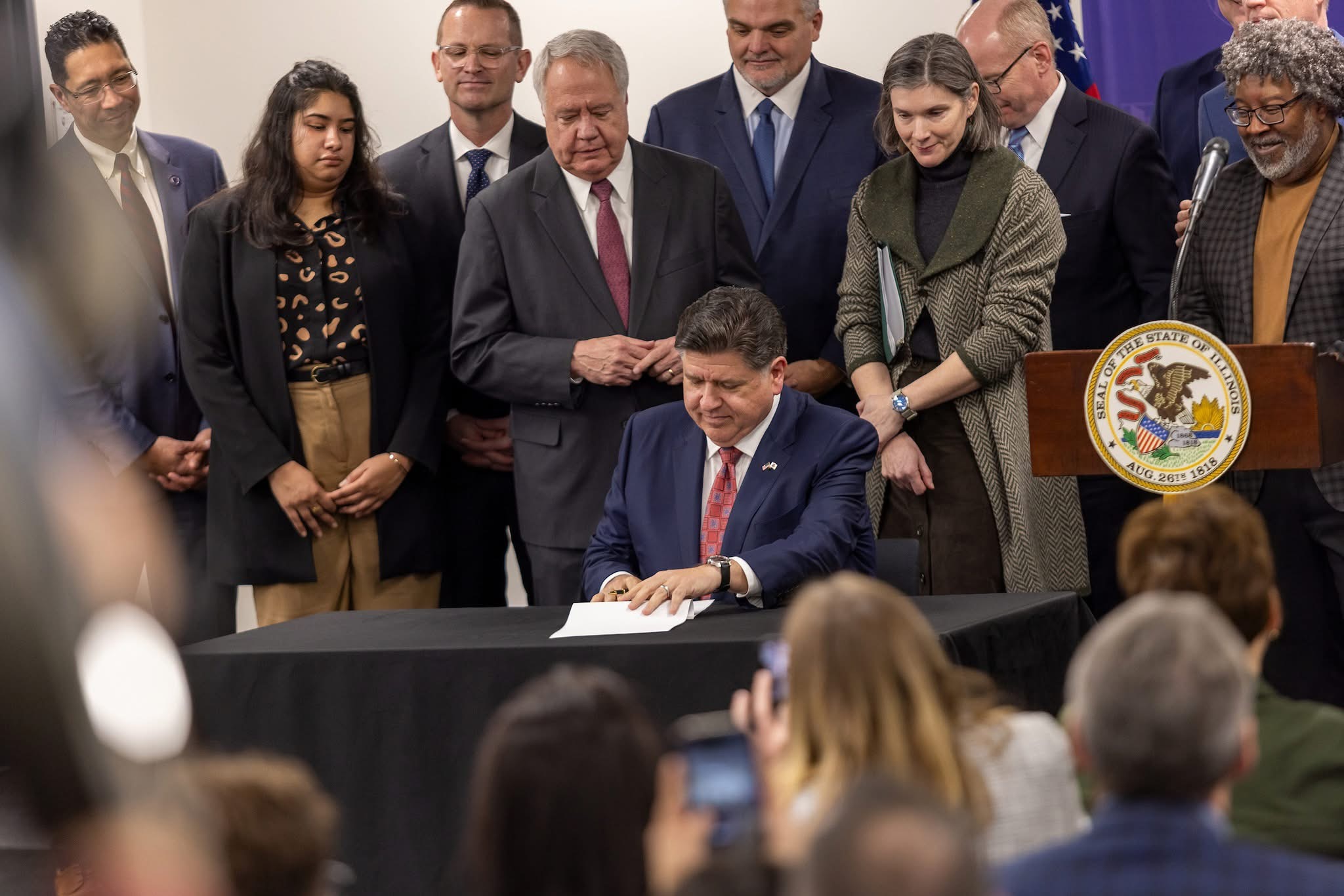
Driven by increasing electricity prices across the country, Ill. Gov. JB Pritzker signed the Clean and Reliable Grid Affordability Act on Jan. 8.
Why it matters: The Illinois Power Agency concluded the bill will save Illinois residents $13.4 billion over the next 20 years. Sixth District Vice President Mike Clemmons said it will also create good jobs for IBEW members.
What they’re saying: “The Clean and Reliable Grid Affordability Act is a major win for working families and for the skilled union men and women who keep Illinois powered every day,” Clemmons said. “At a time when private grid operators are driving up costs and families are feeling the squeeze, this legislation puts affordability, reliability and accountability first.”
Renewables lead the way: The legislation builds on the state’s recent efforts to increase its renewable energy portfolio, with new generation coming online and more in the pipeline. The state’s wind generation capacity has tripled since 2016, while solar remains a key energy source. Illinois produces the most nuclear energy in the country.
Zoom in: The legislation calls for increasing energy capacity by:
- Leaning into grid-scale battery storage: increasing the state’s storage capacity to 3 gigawatts by 2030
- Promoting baseload renewable energy by lifting the ban on new large scale nuclear reactors
- Initiating permit reforms to allow for quicker approval of renewable energy projects
- Creating high quality job opportunities and labor standards, and encouraging the use of project labor agreements
- Harnessing technology by incentivizing the use of electric vehicles, small batteries, solar panels and smart thermostats to save energy
- Brainstorming cost-effective ways to limit energy bill increases
The bill takes effect June 1.
Photo caption: With IBEW Sixth District Vice President looking on, Gov. Pritzker signs a bill to increase energy capacity in Illinois.